Category Archives: General

India Defends Right to Access Personal Data

http://sunilnehra.com/wp-content/uploads/2011/04/login.jpgThe Indian government said Tuesday that new rules allowing it to access personal information available with Internet companies have inherent checks and balances against misuse.
The rules under section 43A of the Information Technology Act were enacted last month and reflect the government’s perception that security threats to the country can be countered by better access to online information.

The country is, for example, locked in a dispute with Research In Motion, demanding access to e-mails and other communications on RIM’s corporate service, called BlackBerry Enterprise Server.

Privacy groups and lawyers have described the rules as draconian and said they infringe Indians’ fundamental rights. “These are arbitrary powers that are being given to government, without any checks and balances,” said Pavan Dugga, a cyberlaw consultant and advocate in India’s Supreme Court.

The rules place controls on the gathering and use of personal data by Internet companies, including requiring permission from the provider of information for sharing such data. But the rules cite the government as an exception in this regard.

This article first appeared on The PC World

Microsoft to buy Skype

Just days after reports that Google and Facebook were interested in partnering with, and possibly buying VoIP company Skype, Microsoft announced that it was buying the company for $8.56 billion in cash.

Last year, Skype had revenue of $860 million on which it posted an operating profit of $264 million. However, it overall made a small loss, of $7 million, and had long-term debt of $686 million. It was the second time Skype has been bought out; after being started in 2003, it was purchasd by eBay in 2005 for $3.1 billion. eBay then sold the majority of its stake in 2009 to a private investment group for $1.2 billion less than it paid.

for detailed read head over to NDTV

Apple beats Google

In a recent brand survey by Millward Brown, Apple has taken the top spot from Google as the world’s most valuable brand. The survey revealed the Apple brand to be worth a staggering $153 billion; which was a huge increase on last year’s figures. This resulted in Apple coming out on top and ended Google’s four year reign at the top.

Peter Walshe, global brands director of Millward Brown, says Apple’s meticulous attention to detail, along with an increasing presence of its gadgets in corporate environments, have allowed it to behave differently from other consumer-electronics makers. ”Apple is breaking the rules in terms of its pricing model,” he told Reuters by telephone. “It’s doing what luxury brands do, where the higher price the brand is, the more it seems to underpin and reinforce the desire.”

Out of the top ten brands revealed in the survey, six were technology and telecoms companies. Google at number two, IBM at number three, Microsoft at number five, AT&T made number seven and China Mobile number nine.

The survey takes the value that the company puts on its own brand in its earnings report as a starting point. This is then combined with the perceptions of over 2 million consumers in the market who are surveyed over a 12 month period. A factor is then applied based on the company’s short-term future growth prospects.

[Millward Brown via Reuters]

BSNL network plan hits a roadblock

http://www.telegraphindia.com/1110510/images/10bus-Internet.jpgThe Telecom Regulatory Authority of India (Trai) is not keen on Bharat Sanchar Nigam Ltd (BSNL) rolling out the national optical fibre network to provide high-speed Internet connection across India.

The network rollout project is part of the national broadband plan, being finalised by the telecom ministry, to provide high-speed Internet connections to 160 million households by 2014.

Trai has argued that the move will be anti-competitive.

The department of telecom (DoT) had proposed that BSNL should act as the executing agency to roll out the network with government funding. The project is estimated to cost Rs 60,000 crore.

Originally published by: The Telegraph

Get Richer by avoiding this Money Mistake

http://im.rediff.com/getahead/2009/sep/08debt2.jpgMental Accounting is one such money mistake even smart people are committing.  Understanding this mistake and avoiding this could make us richer. Behavioral Finance experts say that mental accounting works this way: Let us say you have bought a Rs.200 ticket to a movie. When you show up at the entrance of the theatre and realize you have lost your ticket, do you buy another ticket? If you are like most people, you would probably think twice. You may still drop down the money, but you will now feel that you paid Rs.400 for a Rs.200 movie.

But let’s construct the scenario differently. Let’s say you hadn’t bought the ticket yet, and you show up at the entrance to buy your ticket. Unfortunately, you realized you’ve lost Rs200 in cash since you walked from the parking place. But fortunately, you still have enough in your wallet to cover the cost of the ticket. Do you buy the ticket? Again, if you are like most people, you may feel upset about the lost money, but it probably won’t affect your decision to buy the ticket. Why?

Behavioural Finance experts conducted similar experiments. They found that 46% of those who lost the ticket were willing to buy a replacement ticket. On the other side 88% of those who lost an equivalent amount of cash were willing to buy a ticket.

Both scenarios are a loss of Rs.200. However, in the second scenario you separate the loss of the Rs. 200 from the purchasing of the ticket. In the first you consider the cost of the movie as a total of Rs.400 and suffer at the high cost.

It is because of the psychological phenomenon known as mental accounting. One of the fundamental concepts in Economics says that wealth in general and money in particular, should be fungible. Fungibility, in a nutshell, means that Rs.100 in lottery winning, Rs.100 in salary and Rs.100 tax refund should have the same significance and value to you since each Rs.100 has the same purchasing power at the market. But do you treat them in a similar way?

Mental accounting has enormous consequences in your daily life. It affects how you spend money and how you save. It influences how you deal with losses and windfall gains.

How Does Mental Accounting Affect You?

1) The source of the money affects how it is spent.

You tend to dine lavishly with the “gift meal vouchers” given by your company. But you will be dining consciously if you are paying out of your salary.

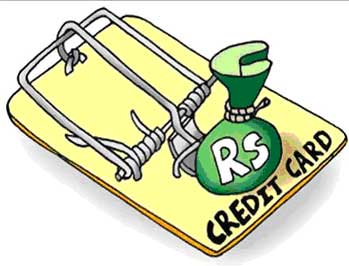
You are most likely to spend more with credit cards than with cash.

You may consider Tax refund as“free money”. In actual terms it is your own money. You will not spend tax refunds, birthday gift money or lottery winnings on essential things like utility bills, school fees, paying off your credit card debt. But you will be more than happy to spend the same money on discretionary items such as vacations or a trendy mobile phone.

2) Don’t be a victim of ‘Relative cost’.

Assume you are going to a super market to buy a laptop. The price is Rs.40000. But you get to know that there is another branch of the supermarket, a ten minutes walk away, in which the same laptop is sold for Rs.39950. Will you walk down to the other branch?

Let us say instead of buying a laptop you have planned to buy a memory card. The price at the supermarket is Rs.100 and at the other branch is Rs.50. Where will you buy the card?

Most of us will make a trip to the other branch for the memory card but not for the laptop. Because we think that the Rs.50 saved on a Rs.100 item is better than the same amount saved on a Rs.40000 item.

But both the situation is same. You save Rs.50 by making 10 minutes walk to the other branch.

Remember that money is money. Rs.50 saved on Rs.40000 laptop is not less money than Rs. 50 saved on Rs.100 memory card.

How to face Mental Accounting and spend consciously?

  • You can use mental accounting to your advantage by spending money out of your salary. Immediately invest the “free money” like Tax refunds, gifted money or any other windfall gains.
  • Imagine that all income is earned income.
  • Use the free meal vouchers and other gift vouchers to buy essential items.
  • Pretend you don’t have a credit card. I am not telling you not to use credit cards. I am saying you should stop and think: would I buy this if I was using cash?

A Successful Practical Strategy:

You can have two bank accounts. One for the purpose of savings and the other one for spending. Every month you need to set aside some amount for expenses as per your budget or previous experience. That amount you need to transfer to your spending account. Balance amount you need to keep it in savings account.  You need to meet all your expenses including your credit card payment from the spending account. You should not spend from your savings account.

In between, if you receive any cash gifts or windfall gains, deposit them in your savings account. If you receive gift vouchers, then transfer the money equivalent of that voucher from your spending account to your saving account. That is your spending limit will not go up by just receiving the gift voucher. So that you will not use it lavishly and use it only on pre-planned things.

When it comes to money your mind unconsciously plays this trick of mental accounting. You have understood that today. So hereafter, you can avoid this mistake and you become richer day by day.

The author is Ramalingam K, an MBA (Finance) and Certified Financial Planner. He is the Founder and Director of Holistic Investment Planners (www.holisticinvestment.in) a firm that offers Financial Planning and Wealth Management. He can be reached at ramalingam@holisticinvestment.in.

Risk of delaying Financial Decisions

http://quadconsultancy.files.wordpress.com/2010/09/financial-planning-decision-support-executive1.jpgIs lack of time making you go crazy in your attempt to plan your finance?

Does your busy professional schedule offer you time to monitor your personal finance?

Balaji is working for an MNC. Today he has got a deadline for a particular assignment. His day is fully packed. First thing in the morning, he receives a mail from his HR Dept stating that today is the last date for producing proofs for tax saving investments; otherwise a huge amount will be deducted from his salary as tax. He wanted to do some tax saving investments urgently and submit the proof on or before end of the day.

Mahesh is an NRI, working for a software company in US. He has got a couple of crores in his overseas fixed deposits giving a return of 1.50% p.a. Returns are taxable. At times, he thinks that the return what he getting is very low.  He wanted to check up with a professional financial planner in India. He thinks he will contact as soon as his present project gets completed. Like this he has not contacted any financial consultant for the last 3years because of some reason or the other.

Most of the investment decisions are either taken because of some compulsion or urgency or postponed because of compulsion or urgency in some other area of life. This is because we want to complete the urgent thing first not the most important thing. Many important things that contribute to our overall financial objectives and give richness don’t tend to give any pressure on us. Though they may not be urgent, they are the things that we must give importance and carry out immediately.

We act upon things like pressing problems, deadline-driven projects, and official meetings. We don’t give importance to

  • prepare for a meeting with a financial planner;  appraising a financial planner before making investments
  • planning activities like budgeting, children’s future planning, retirement planning;
  • protective activities like taking a term insurance, house holder policy, health insurance;
  • empowering ourselves by upgrading our knowledge with reference to investments

Why we are not able spend time on important things and spend most of our time on urgent things?  Because, we are following a way that focuses on how fast or efficiently we are getting things done. We are not following a way that focuses on why we are doing things.

Take the case of Mr.Balaji. Why didn’t he do his tax planning during the beginning of the financial year itself? Why is he chasing at the last minute? Balaji is much worried about his deadline for assignment than tax planning. As he is making investment urgently, it is difficult for him to choose the right financial advisor and also difficult to judge which one would be the best tax saving option for him. He will be investing with an advisor who can get the investment proof on the same day.

Is this the basis on which we select an investment advisor? Will the relationship of Mahesh and this advisor be a long term one? Will this investment is going to be of any help to Balaji in meeting the higher education expenses of his son after 15 years?

Coming to the case of Mr. Mahesh, he had couple of crores at 1.5% pre-tax return. He could have tripled his returns by investing in an Indian liquid fund which is very safe.  There are far better investment options available for him to choose. But he has settled for 1.5%.

If he could have spent a day or two in carefully choosing the right financial advisor and investment product he could have earned more. The earning opportunity which he missed with his investments might equal to his 6 months or 1 year salary.

He could have generated that passive income equivalent to 6 month or 1 year salary without any pressure from the top management; without meeting any deadlines by just spending a day or two.

We are all working hard for money. Is our hard earned money is working for us or lying in our SB a/c or really growing?

We find a ladder and see there are so many people trying to reach the top of the ladder faster.  Then we also follow the group, deadlines to be met in each and every step; focusing more on reaching the top and finally reached the top. Only after reaching the top, we realize that we have come to a very wrong place or a place which is not worth missing so many things and opportunities in life. This is how the today’s world is.

Nothing wrong in working harder or focusing more on completing the assignment or spending more time on finishing the project  on deadline. These are all good thing to do. But always remember, there are better and best things to do. We keep too many good things ahead of a few best things.

Setting up financial goals; working out a plan for achieving those goals; and implementing those plans are all best things to do in life. You know in advance where you want to reach exactly, by doing this exercise. As we progress, we enjoy the journey. As we reach the place, we really feel happy and we have not missed any important thing on the way.

Procrastination and not giving priority to financial goals and investment plans are costliest mistake one can take. So let us stop procrastinating and give priority to our financial goal setting and investment planning. Then life will be really so beautiful.


The author is Ramalingam K, an MBA (Finance) and Certified Financial Planner. He is the Founder and Director of Holistic Investment Planners (www.holisticinvestment.in) a firm that offers Financial Planning and Wealth Management. He can be reached at ramalingam@holisticinvestment.in.

Easiest way to download Youtube Videos

We have always wanted to download that youtube video that we liked. There are several online sites that allow us to download the youtube videos, but at times the links dont seem to be working.

Here is one sure shot way to downoad youtube videos with just one click.

First you need to dowload and install Internet download manager.

Restart your web browsers.

IDM is smart enough to integrate itself with IE and Firefox. It also works seamlessly with other browsers too.

Then you just need to open up that youtube video and click the Download this Video popup link of IDM as show in the picture. Select the desired location and you are done.

The 10 Financial Doctrines of Wise Retirement Planning

http://www.kamyabology.com/pptadmin/98/retirement.jpgLet’s begin on planning finance for retirement:

It is usual for many of us to aspire for a financially secure and happy retired life. However being financially prepared to meet the demands of retired life by saving and investing requires considering and following the 10 doctrines of wise retirement planning.

A look at the 10 doctrines to wise retirement planning:

1) Provide for contingencies
Most of us tend to underestimate our retirement needs. Provision for medical emergencies with inadequacy of medical insurance in old age requires financial provision. Lack of government social security schemes and retirement benefits to self-employed and private sector employees creates requirement for more provision for contingencies after retirement.

2) Think that you will live long:
This is true with increased life expectancy. Now you will have more years of life after retirement. Thanks to medical advancements. So it is better to plan for the additional years and avoid living frugally in old age.

3) Plan that you will retire early:
It is wise to provide for contingencies arising that require you to retire early. You could suffer ill health, lose your job, or need to care for a sick or elderly member of the family. Women may have to opt voluntarily to look after the family needs.  All this requires more savings for retirement needs.

4) Beat the inflation before it beats you:
Inflation affects the personal finance needs of the working class, but pay rises could help them resolve it to a certain extent. However the retired have to save more to reduce the impact of inflation. Investing in modes that give you extra returns could help greatly.
Investors come to me and say “I would like to accumulate 2 crores and retire”. But when we really work out the inflation adjusted retirement corpus, the 2 crores would not be sufficient for him to have comfortable retirement. 2 crores may feed you enough in the first year after your retirement. The returns from the same 2 crores will not be sufficient for you take care of all your needs on the 10th year after your retirement because of the skyrocketing inflation figures.

5) Provision for increased medical expenses after retirement:
Most of us underestimate medical expenses after retirement, with these expenses being inevitable in old age. Hence more provision for medical insurance helps. A consideration of your family’s general health, family history of certain genetic disorders, and the class of hospital you get treated would help in proper estimation for medical insurance.

6) Provide for your spouse and dependents who may outlive you:
It is inevitable that this need should not be overlooked. Your spouse and dependents need to live a secure financial life after your lifetime. Taking up insurance policies during your working life and well thought out retirement planning will take care of your dependents and spouse financially.

7) Realize you need to be vigilant about sources of retirement income:
Sometimes we may be ignorant of benefits on retirement like provident fund, gratuity and other benefits. In India the lack of social security schemes after retirement makes it necessary to invest more in good income generating sources for steady flow of retirement income. The advice of investment consultants, along with financial education and information contributes to good financial standing after retirement.

8 ) Educate yourself about retirement savings plan management:
When the majority is relying on the pension schemes in the form of ulips offered by various public and private insurance companies, as a smart investor you need to understand the hidden charges of these pension policies. These policies are all heavily front loaded.
So you need to evaluate various investment options available for retirement. You need to accumulate sufficient knowledge in this regard. In addition learning to keep track of them with professional help makes these saving plans work for you.
9) Plan for an income for life:
Your retirement plans need to be financial plans to make income last you a lifetime. Pensions or annuities providing best income need to be safeguarded, as withdrawing large sums from them could end you in financial insufficiency in the final years of your life.

10) Take professional investment advice that works:
Many do realize the importance of financial advice from professional financial advisors, but in practice seek it from family, friends and colleagues. A right financial advisor could give you good investment advice to have financially secured retirement ife.

A final note:
I am sure you want to emerge financially secure for your retired life and will follow these 10 financial tenets to wise retirement planning.

The author is Ramalingam K, an MBA (Finance) and Certified Financial Planner. He is the Founder and Director of Holistic Investment Planners (www.holisticinvestment.in) a firm that offers Financial Planning and Wealth Management. He can be reached at ramalingam@holisticinvestment.in.
image: http://Kamyabology.com

Resume tips

This is again that same time of the year when the students graduate and start hunting for jobs. There are a lot of jobs and a lot of people for competition and a good resume can be the differentiator between you and the competition.

Having a solid and effective resume can greatly improve your chances of landing that dream job. That is beyond discussion. How does one make sure that his resume is top notch and bullet proof, however? There are several websites with tips around the web,  we found out one extremely good article about resume writing tips. Following are just the 3 point from the main article. The article link is at the end of the post.

resume writing tips


1. Know the purpose of your resume

Some people write a resume as if the purpose of the document was to land a job. As a result they end up with a really long and boring piece that makes them look like desperate job hunters. The objective of your resume is to land an interview, and the interview will land you the job (hopefully!).

2. Back up your qualities and strengths

Instead of creating a long (and boring) list with all your qualities (e.g., disciplined, creative, problem solver) try to connect them with real life and work experiences. In other words, you need to back these qualities and strengths up, else it will appear that you are just trying to inflate things.

3. Make sure to use the right keywords

Most companies (even smaller ones) are already using digital databases to search for candidates. This means that the HR department will run search queries based on specific keywords. Guess what, if your resume doesn’t have the keywords related to the job you are applying for, you will be out even before the game starts.

These keywords will usually be nouns. Check the job description and related job ads for a clue on what the employer might be looking for.

for more tips head over to the original article.

Launcher 7

https://ssl.gstatic.com/android/market/info.tikuwarez.launcher3/hi-256-1-50b8fe022933887ce4f4356df95c559ace887952

I had a look at windows mobile 7 phone and I was hooked at the user interface. Since then I was looking for something that could change my Galaxy 3 home screen to windows 7 tiled home screen. And then I found Launcher 7. It is more than decent at giving the feel of windows 7 user interface.

It is still a long way ahead for this app. But it will not disappoint the user.

It is a Windows Phone 7 style launcher for Android.

Unlike other current WP7 launchers (Windows Phone Android, Metro UI), this one allows you to properly modify your start screen. Just long press on a tile and drag tile where you want!

Point your androids barcode reader to the code to get it.

http://qrcode.kaywa.com/img.php?s=5&d=https%3A%2F%2Fmarket.android.com%2Fdetails%3Fid%3Dinfo.tikuwarez.launcher3