Category Archives: General

Please Support Sahas

Sahas Mehra is 17 years old and resides in Mumbai. He loves football and enjoys reading and listening to music. He started off with his very first year in college but didn’t get a chance to appear for his final exams. A month before his 17th birthday he was diagnosed with Philadelphia ALL, a high-risk blood cancer. What followed was hospital stays, transfers, complications and chemotherapy. But this was not enough. The family was told that a Bone Marrow Transplant would be essential to give him a chance to survive. There is no marrow match within the family. A Non-Related Allogenic transplant is recommended. The estimate letter provided by the hospital is for a minimum of Rs. 51 lakh (around $106250) , if complications don’t occur. This is not something the family can afford. This blog is an attempt at creating awareness about his case because financial support for the transplant is needed on an urgent basis. We also hope to create awareness about the the primary reason for the unaffordable cost of treatment – lack of a proper bone marrow registry in India.

Indian Currency Gets a new Symbol- D Uday Kuma

IIT Post-Graduate D Uday Kumar entered  his name in the history book, as his Rupee design was approved by the panel. The new design reflects Indian ethos and culture, as required by Finance Minister Pranab Mukherjee.

Uday Kumar’s design was selected from a pool of five symbols. The decision was taken by a five-member panel. It was approved by the Union Cabinet  The new symbol will be used globally like the Dollar ($) and Pound (£).

Udaya Kumar’s Rupee symbol contains the Devanagari ‘Ra’ and the Roman capital ‘R’. The main criteria was that it should fit the standard keyboard and be in the national language script.

Uday Kumar’s Rupee symbol is based on two concepts – Indian Tricolour and Arithmetic. Uday Kumar will be get a cash reward of Rs 2.5 lakh. He is a student of IIT, Mumbai.

image: moneycontrol.com

Bombay the inside story

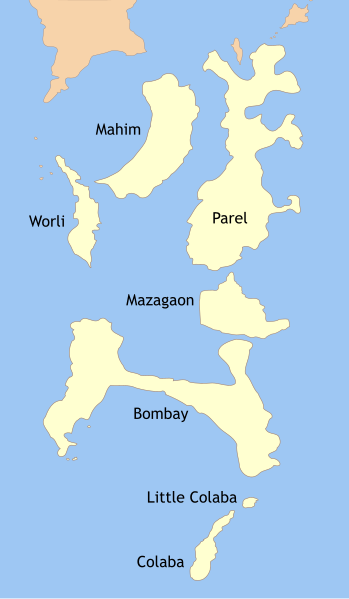
http://upload.wikimedia.org/wikipedia/commons/thumb/5/51/Seven_Islands_of_Bombay_en.svg/349px-Seven_Islands_of_Bombay_en.svg.pngAccording to ancient history, a grouping of seven islands comprising Colaba, Mazagaon, Old Woman’s Island, Wadala, Mahim, Parel, and Matunga-Sion formed a part of the  kingdom of Ashoka the Great of Magadh, ironically in North India.

The Bhaiyas and Biharis whom the Thackerays accuse of being outsiders in Mumbai, come from the region, which was a part of Ashoka the Great’s empire.. We judge everything according to history and the history of Mumbai proves that its earliest known ownership was with a North Indian.

The seven islands of Mumbai passed through many hands, the sultans of Gujarat, the Portuguese and the British. Every ruler left behind proof of residence in Mumbai.

The Mauryans left behind the Kanheri, Mahakali and the caves of Gharapuri more popularly called Elephanta.

The sultans of Gujarat built the Dargahs at Mahim and Haji Ali, the Portuguese built the two Portuguese churches, one at  Prabhadevi and the other St Andrews at Bandra.

They built forts at Sion, Mahim, Bandra and Bassien. The Portuguese named the group of seven Islands ‘Bom Baia’, Good Bay. The British built a city out of the group of seven islands and called her Bombay.

The original settlers of the seven islands, the Koli fishermen, worshiped Mumbaidevi, her temple still stands at Babulnath near Chowpatty. The Kolis called the island Mumbai,  ‘Mumba, Mother Goddess’.

In 1662, King Charles II of England married the Portuguese Princess Catherine of Braganza, and received the seven islands of Bom Baia as part of his dowry. Six years later, the British Crown leased the seven islands to  the English East India Company for a sum of 10 pounds in gold per annum. It was under the English East India Company that the future megapolis began to take shape, after the first war for independence Bombay once again became a colony of the British Empire.

History has forgotten this but the first Parsi settler came to Bombay in 1640, he was Dorabji Nanabhoy Patel. In 1689-90, a severe plague epidemic broke out in Bombay and most of the European settlers succumbed to it. The Siddi of Janjira attacked in full force. Rustomji Dorabji Patel, a trader and the son of  the city’s first Parsi settler, successfully defeated the Siddi with the help of the Kolis and saved Bombay.

Gerald Aungier, Governor of Bombay built the Bombay Castle, an area that is even today referred to as Fort. He also constituted the Courts of law. He brought Gujarati traders, Parsi shipbuilders, Muslim and Hindu manufacturers from the mainland and settled them in Bombay.

It was during a period of four decades that the city of Bombay took shape. Reclamation was done to plug the breach at Worli and Mahalakshmi, Hornby Vellard was built in 1784. The Sion Causeway connecting Bombay to Salsette was built in 1803. Colaba Causeway connecting Colaba island to Bombay was built in 1838. A causeway connecting Mahim and Bandra  was built in 1845.

Lady Jamsetjee Jeejeebhoy, the wife of the First Baronet Jamsetjee Jeejeebhoy donated Rs 1, 57,000 to meet construction costs of the causeway. She donated Rs. 1,00,000 at first. When the project cost escalated and money ran out half way through she donated Rs 57,000 again to ensure that the vital causeway was completed. Lady Jamsetjee stipulated that no toll would ever be charged for those using the causeway. Today Mumbaikars have to pay Rs 75 to use the Bandra-Worli Sealink, connecting almost the same two islands. Sir J J Hospital was also built by Sir Jamsetjee Jeejeebhoy.

The shipbuilding Wadia family of Surat was brought to Bombay by the British. Jamshedji Wadia founded the Bombay Port Trust and built the Princess Dock in 1885 and the Victoria Dock and the Mereweather Dry Docks in 1891. Alexandra Dock was built in 1914.

A Gujarati civil engineer supervised the building of the Gateway of India. The Tatas made Bombay their headquarters and gave it the iconic Taj Mahal Hotel and India’s first civilian airlines, Air India. The Godrejs gave India its first vegetarian soap.

Cowasji Nanabhai Daver established Bombay’s first cotton mill, ‘The Bombay Spinning Mills’ in 1854. By 1915, there were 83 textile mills in Bombay largely owned by Indians.

This brought about a financial boom in Bombay. Although the mills were owned by Gujaratis, Kutchis, Parsis and Marwaris, the workforce was migrant Mahrashtrians from rural Maharashtra. Premchand Roychand, a prosperous Gujarati broker founded the Bombay Stock Exchange. Premchand Roychand donated Rs 2,00,000 to build the Rajabai Tower in 1878.

Muslim, Sindhi and Punjabi migrants have also contributed handsomely to Mumbai.

Mumbai is built on the blood and sweat of all Indians. That is why Bombay belongs to all Indians.

Apart from its original inhabitants, the Kolis, everyone else in Mumbai, including Thackeray’s ‘Marathi Manoos’, are immigrants.

The “Mumbai for Marathi Manoos” war cry has once again been raised to shore up the sagging political fortunes of the Thackeray family.

When the Shiv Sena-BJP combine came to power in 1993, under the guise of reverting to the original name they replaced Bombay with Mumbai.

I wonder when they will discard the anglicized Thackeray and revert back to their original Marathi surname Thakre?

This article was written on February 7, 2010 by Tushar Gandhi, founder/president, Mahatma Gandhi Foundation, and the grandson of Gandhiji.

How to delete Facebook friend list

Long time back I created a few lists on facebook and over the time one of them became redundant. I was looking all over facebook about how to delete that list and ultimately stubled upon the right link.

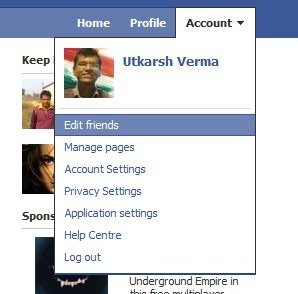
1.click on Accounts
2.click edit friends

fb1
3. On the left, about half way down you will see the category "Lists"

fb2
4.click on the list you want to delete
5.click on "Delete List"

fb3
6.Confirm by clicking "Delete List"

Facebook at work

facebook-at-work[1]

Whenever I check Facebook in the noon all is see is that most of my requests have been accepted in a time frame of last 3 to 4 hours. Most of the comments are made on my updates in the same time frame and most status updates too are made at the same time. It seems like people come to work, start their workstations, fire up their browsers and … tada… www.facebook.com …. and the work begins…

There is also a lot of activity at the end of the day in evening but not as much as in the morning. The reason I think is “The day starts at the same time for all but ends at different hours for each of us”, isn’t it?

Facebook at Work = Lost Productivity?

According to the Nucleus Research survey, employers are losing 1.5 workers per 100 in employee productivity to the supposed time-wasting activity known as "Facebooking." To reach that number, the company surveyed a random sampling of 237 office workers.

A Second Opinion

Nucleus Research isn’t seeing the bigger picture here, so we’d like to counter their research with some findings from the University of Melbourne. U of M professor Dr. Brent Coker also surveyed a small sample of office workers (300 to be exact) and came to a rather different conclusion.

Read the full discussion on Readwriteweb and also let us know about your thoughts 🙂

A cockroach can live without his head! #Omg

Cockroach_closeup

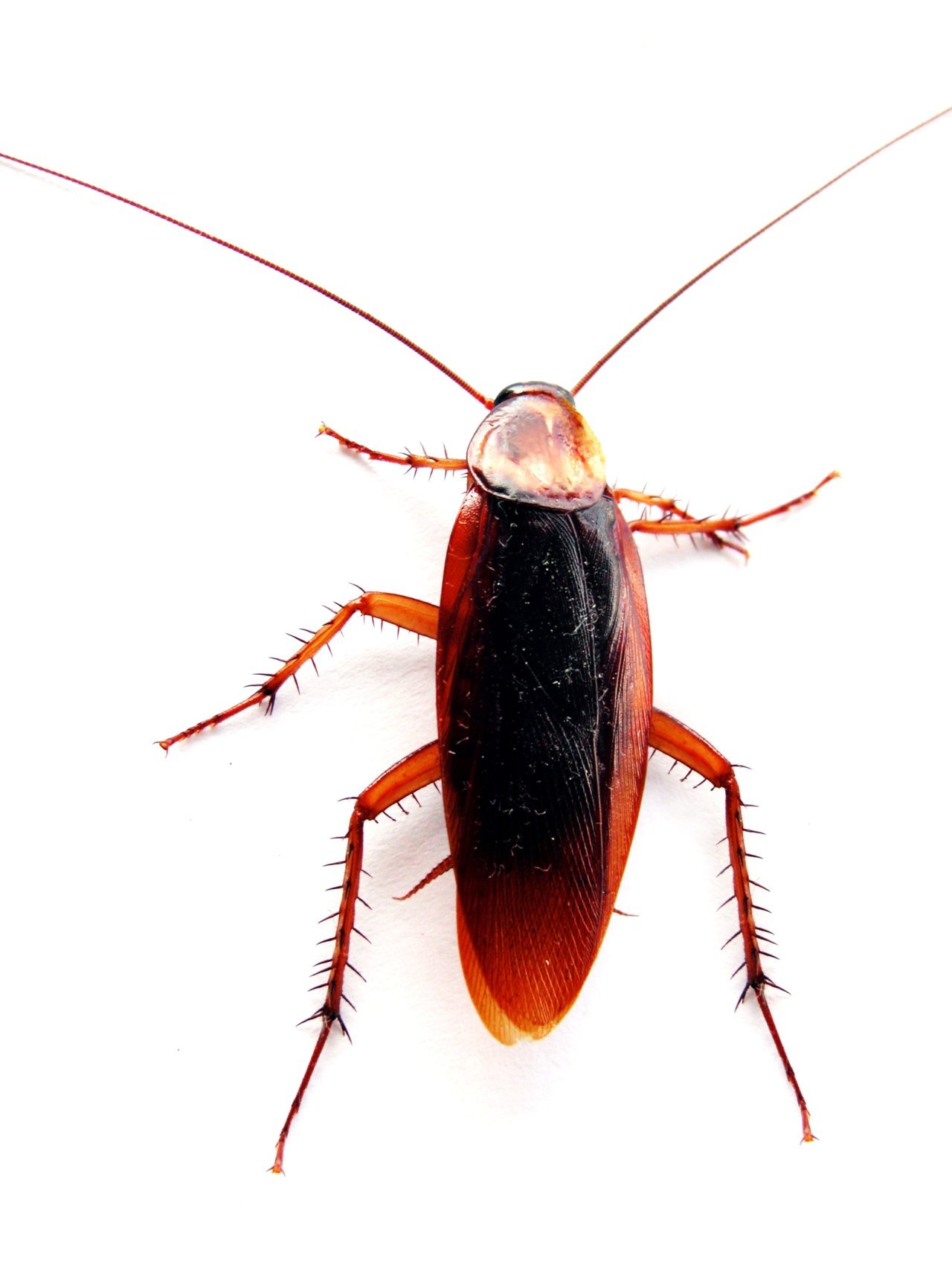
A cockroach could live a long time, perhaps a month, without its head. The only reason we need our head for basic survival is:

(1) We breath through our mouth or nose and the breathing rhythm is controlled in our brain. Cutting off our head would interphere with breathing although that could be maintained with a respirator.

(2) Cutting off our head could lead to blood loss and a drop in blood pressure which would result in death due to lack of blood transport of oxygen and nutrition to our tissues.

(3) Cutting off our head would prevent us from eating and we would die of starvation pretty quickly.

All of these reasons for dying are not present in cockroaches and many insects in general:

(1) Cockroaches breath through spiracles which are in each body segment and the blood does not carry oxygen to the tissues. The spiracles deliver air to each cell of the body through a set of tubes called tracheae. The brain does not control the breathing through the spiracles.

(2) The cockroach does not have blood pressure the way a mammal does and so cutting off the head does not lead to uncontrolled bleeding.

(3) The cockroach is a poikilotherm or cold blooded animal. They need much less food and a one day meal would be enough to last them a whole month as long as they were not extremely active. Without a head the cockroach would just sit around without doing anything much.

All this along with a cool temperature could allow the cockroach to last about a month without need for their head, as long as they did not get infected with a mold, bacterium or virus, which could kill them prematurely.

Woman Arrest Law in INDIA

criminal_0
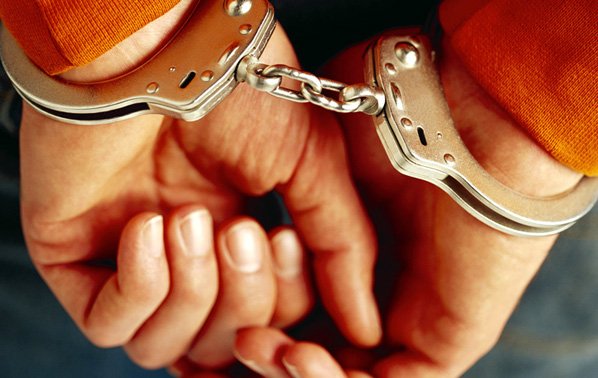
An incident took place in Pune – a young girl was attacked by a man
posing as a plain clothes officer; he asked her 2 come 2 the police
station when she & her male friend didn’t have a driver’s license 2
show. He sent the boy off 2 get his license and asked the girl to
accompany him to the police station. Took her instead to an isolated
area where the horrendous crime was committed. The law [which most of
us are not aware of clearly states that between 6 pm and 6 am, a
woman has the right to REFUSE to go to the Police Station, even if an
arrest warrant has been issued against her. It is a procedural issue
that a woman can be arrested between 6am and 6pm, ONLY if she is
arrested by a woman officer & taken to an ALL WOMEN police station.
And if she is arrested by a male officer, it has to be proven that a
woman officer was on duty at the time of arrest.

Everyone in this country must know this.

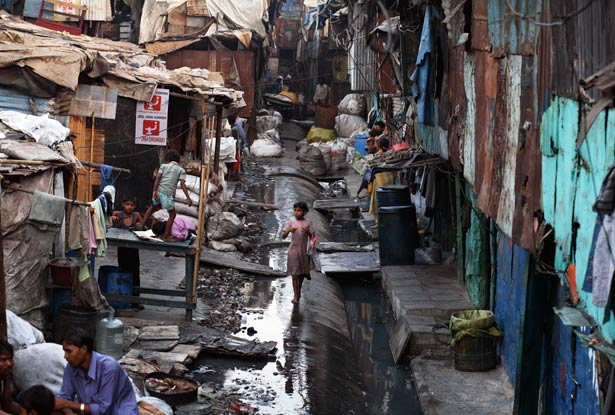
Dharavi: A feature

image

It doesn’t take a wizard’s eye to see the advantage that Dharavi has. It is served by two railway lines suitable for middle class commuters, along with Bandra Kurla complex, a global corporate enclave located directly across the remaining mangrove swamps, as close to Dharavi as Wall Street is to Brooklyn Heights. Dharavi enjoys the advantage of being close to both the Domestic as well as the International Airport.

There is not a single kind of work that is not being done in Dharavi from the daily wages unskilled labourer to the highly skilled craftsmen whose works are exported to Americas and the Europe.

Dharavi, right in the middle of the map. Is a quirk of geography and history. Large masses of poor people are not supposed to be in the center of the city. They are supposed to be on the periphery, stacked up on the outskirts. Dharavi had once been on the northern fringe, but ever growing Mumbai had sprawled toward the famous slum, eventually surrounding it.

Dharavi is routinely called “the largest slum in Asia,” a dubious attribution sometimes conflated into “the largest slum in the world.” This is not true. Mexico City’s Neza-Chalco-Itza barrio has four times as many people. In Asia, Karachi’s Orangi Township has surpassed Dharavi. Even in Mumbai, where about half of the city’s swelling 12 million population lives in what is euphemistically referred to as “informal” housing, other slum pockets rival Dharavi in size and squalor.

coming soon more on Dharavi’s contribution to economy.