All posts by Utkarsh

Solution designer with Firstsource solutions. A post grad in Networks and IT Infrastructure. Technology enthusiast, blogger, webdesigner, Network security aspirant and in love with electronics and gadgets. This blog is an attempt to share what I find interesting... almost anything @Mtaram on twitter and

Grouponomics of the deal

http://www.wired.com/images_blogs/epicenter/2011/05/groupon.jpg

18 months ago, Groupon didn’t exist. Today, it has over 70 million users in 500-odd markets, is making more than a billion dollars a year, has dozens if not hundreds of copycat rivals, and is said to be worth as much as $25 billion. What’s going on here?

There’s obviously something clever and innovative behind Groupon — but what is it? Given that customers with Groupons are saving lots of money on goods and services, how can this possibly be good for merchants? Is there a catch somewhere?

There are significant network effects at play here: The more people Groupon signs up, the more targeted its deals can be. And there’s another social aspect to Groupon’s success I’ll come to in a minute.

But first it’s worth looking at the innovation in the name of the company: the idea that coupons only become activated once a certain minimum number of people have signed up for them. This is essentially a guarantee for the merchant that the needle will be moved, that their effort won’t be wasted. With traditional advertising or even with old-fashioned coupons, a merchant never has any guarantee that they will be noticed or make any difference.

But with a Groupon, you know that hundreds of people will be so enticed by your offer that they’re willing to pay real money to access it. That kind of guaranteed engagement is hugely valuable, and more or less unprecedented in the world of marketing and advertising.

Then there’s the twist in the “coupon” part of the name. No longer do merchants pay money for the privilege of giving coupons away for free in local newspapers. Instead, they receive money — half of the total paid up front. There’s something extremely gratifying about being paid to offer discounts to new customers.

Google, Sprint join the mobile payments race

http://www.wired.com/images_blogs/epicenter/2011/03/Screen-shot-2011-03-20-at-9.30.55-PM.png

Google will announce a new mobile payments system, adding even more urgency to the all-out arms-race taking place in the point-of-sale digital money space. The announcement will include news of a partnership with mobile service provider Sprint to roll out a mobile-payments system based on Near Field Communication, or NFC, technology.

NFC-fans believe the technology will become the standard format for mobile payments. Google’s plan to begin testing its own mobile-payments system was reported months ago, and will install thousands of NFC units made by VeriFone Systems at merchant locations in New York and San Francisco.

NFC to change lifestyle

http://img.koreatimes.co.kr/upload/news/1005171201.jpg

Near field communication (NFC) is emerging as the hottest keyword in the telecommunications industry. Both mobile carriers and handset manufacturers are eyeing the technology as the one to accelerate toward a truly smart life.

What is NFC?

To use a transport card, one only has to have it close to the card reader. They don’t need a communication network. Such wireless communication using tiny computer chips and a radio frequency is called radio-frequency identification (RFID). NFC is a kind of RFID using the 13.56 MHz frequency.

The most notable feature of NFC is that it enables bidirectional communication. Instead of only storing and sending the information to the reader, NFC makes it possible to read and write information on other devices.

NFC works only within a radius of 10 centimeters. Kim Jong-dae, a researcher at the LG Economic Research Institute, says such distance limitation is a strength, rather than weakness, of NFC.

“That could be a fatal defect if NFC is used alone for communication, but it turns into a merit when coupled with other high-speed communication methods such as 3G and Wi-Fi,” he said.

He cites the use of a smartphone with NFC as an example. The user chooses the device he wants to use and puts his smartphone close to it. Hacking and the leak of private information have become a serious problem in the current smart era, but NFC is safe from such threats. Hacking isn’t possible as communication won’t work from a distance of 10 centimeters. As the user doesn’t have to enter a username or password to use the service, there is less chance of hacking.

Chip sets make NFC widely available

NFC is not a new technology. It was first developed by Sony and semiconductor company NXP in 2002, but it didn’t receive much attention due to lack of infrastructure and expensive chipsets. The condition has become more favorable. It took an additional 100,000 won to buy a smartphone with an NFC chipset, but the price of the chipset has gone down to 2,000 to 3,000 won recently. NFC smartphones have become widely available.

“Only around 3 percent of cell phones had NFC, but it is expected to grow explosively from this year,” Kim said. Google started supporting NFC from the Gingerbread version of its smartphone operating system Android, and manufacturers like LG and Samsung announced they will upload NFC to most of their smartphones. Nokia and RIM are also planning to include NFC, and so is Apple on its iPhone 5. The government is also leading the standardization of the technology.

NFC to change lifestyle

At the Mobile World Congress in Barcelona, Spain, in February, Samsung Electronics presented devices with NFC. Local telecommunication giant KT showed its payment system based on NFC.

Smartphones have brought about many changes in daily lives though it’s been only a couple of years since they became widely available. NFC is bringing in even more changes, as seen in the introduction of smartphones equipped with NFC. The mobile card service, which turned smartphones into credit cards installed in small chips, is popular here for its convenience.

“Some use NFC for mobile card payments. However, this is only one of the numerous services based on NFC,” Kim at LG Economic Research Institute said.

“While watching home shopping channels on smart TV with NFC one may just touch the smart TV with the NFC smartphone to buy the product instead of entering usernames and passwords,” he said.

Such smartphones are opening new doors to the mobile service by enabling communication with diverse services that have only been offered offline. By tagging NFC onto smartphones, one can buy tickets, receive information on tourist sites, verify the user on a computer or start a car engine. “Instead of exchanging business cards, people may just hold their smartphones close together to transfer the information. The technology will make all this possible,” Kim said.

iPhone 4 to arrive in India by May 27

After various announcements, the last of which was more than a month and a half ago, operators Airtel and Aircel are finally making good on their claims of bringing the iPhone 4 to India. The duo will be launching it by May 27, or Friday, almost a year after it was launched in the United States, last June. So far, only Aircel has revealed pricing, and as expected, it has a slight premium attached.

The 16GB Apple iPhone 4 will retail for Rs. 34,500, and, the 32GB version will retail for Rs. 40,900. A requisite bumper, to avoid the ‘death grip’, will be charged for separately. This news fortunately is not too confusing for potential customers, as at that price, there are plenty of other phones with better specs, including the just-launched Samsung Galaxy S II, available for around Rs. 33,000.

Customers opting for a new connection will get a micro SIM for the device, and we expect some provision from the operators to help cut SIM cards for existing customers. We were hoping the iPhone 4 would launch with some sort of contract, enabling customers to buy it at a lower price. Aircel has come up with some plans, but we aren’t too sure they will entice customers.

Aircel postpaid customers will be able to get the phone for “free” in the Premium Money Back plan, by paying up front, and then availing voice and data plans that are equal to the phone’s value, valid for 24 months. The Advantage Money Back plan is the same thing, at half the phone’s value and for one year validity. Let us hope Airtel comes up with better plans.

http://www.thinkdigit.com/FCKeditor/uploads/iphone4-seam%281%29.jpg

Twitter buys Tweetdeck

http://cdn.sitetrail.com/wp-content/uploads/2011/02/tweetdeck-logo-300x300.pngIt’s official. Twitter last night finalized a deal to buy TweetDeck, ending weeks of speculation.

The two companies announced the acquisition Wednesday in separate blog posts. Terms of the deal weren’t disclosed.

CNN.com reported Tuesday that Twitter was buying the maker of applications for the microblogging site for $40 million in cash and stock.

“This acquisition is an important step forward for us,” wrote Twitter CEO Dick Costolo in a blog post. “TweetDeck provides brands, publishers, marketers and others with a powerful platform to track all the real-time conversations they care about. In order to support this important constituency, we will continue to invest in the TweetDeck that users know and love.”

Iain Dodsworth, TweetDeck Founder and CEO, insinuated in his blog post that TweetDeck staff won’t be let go because of the acquisition.

“We’ve grown from one team member and a single user, to a team of 15 and a user-base of millions,” he wrote. “Change may well be inevitable, but we remain the same team, staying in London, with the same focus and products, and now with the support and resources to allow us to grow and take on even bigger challenges.”

Today’s news comes after weeks of speculation about potential future owners of TweetDeck.

Apple’s next iPhone Rumours

http://gadgetmedia.info/wp-content/uploads/2011/03/iphone5.jpgApple might be planning to adopt curved glass on the next iPhone, according to a report.

Taiwanese publication DigiTimes claims that Apple has purchased about 300 glass-cutting machines in preparation for producing curved cover glass for the iPhone 5.

It’s unclear what role curved glass would play on an iPhone, though it’s worth noting that the previous-generation iPod Nano used curved glass for its display. Also, MacRumors chief Arnold Kim points out that Samsung’s Nexus S uses a convex curved screen, to improve comfort and perceived usability.

In addition to today’s report about a curved display, publications have claimed the following about the iPhone 5:

  • The handset will debut in September, perhaps during Apple’s annual iPod event.
  • The iPhone 5 will have a flat metal back, instead of the glass on the current iPhone.
  • There’s been some debate about near-field communications technology debuting in the next iPhone, to enable wireless payments with the device at stores. However, we’re skeptical because it would first require merchants to be on board with NFC readers.
  • Likely “under-the-hood” changes include the faster A5 processor currently powering the iPad 2, as well as an 8-megapixel camera sensor designed by Sony.
  • The iPhone 5 will become available on T-Mobile and Sprint, according to some analysts.

Apple does not comment on rumors or speculation.

Multiple publications claim the iPhone 5 will not be announced at Apple’s Worldwide Developers Conference (WWDC) in June, where the company has traditionally introduced new iPhones.

Reasons to get an Android

It is not a farfetched thought to think that the choices in mobile world today are many. As we are moving towards a more digital world cell phones are without a doubt one of the most essential gadgets and one very commonly found in just about everyone’s pocket from a milkman to CEO of a multinational firm. And one name that has definitely taken the mobile world by storm is android. So what exactly makes this platform so special and why should you go for it?

1. Hardware: One advantage that Android has over its nearest competitor in iOS is that it comes with a vast choice of hardware. With iOS you are stuck with iPhone as your hardware device but with Android being the adopted platform of some of the biggest names in mobile manufacturing like HTC, Samsung, Motorola etc. there are vast number of choices in terms of device and even pricing.

Android

2. Open Source: Another advantage with android is its open platform. Unlike iOS there are not stringent rules for the application developers as a result more developers are likely to pick up android API developer kits knowing that they can upload their application on market and subsequently can put it out there for users to use it. In longer term this may even result that android applications may outnumber those on iOS. However the downside of this is there may be far more current application on Android. But applications are definitely a massive plus.

3. Great UI Another advantage in going Android is that it gives you a good solid choice regarding how your UI would look like. With plenty of third party launchers available you can customize your screen according to your own needs. Unlike iOS you are not stuck with the same slide to unlock and box type UI.

4. Widgets: Another positive is the widgets, though slightly battery consuming widgets are great way to display information. Android has always proudly said that they work on making information easily available with having to click anything and most definitely these widgets are a great feature. Plenty of widgets are available and they only enhance your UI.

5. Google integration: Needless to say android is extremely snappy and quick, and with Gmail integrated, it is a great way to keep up with your mail and Gtalk contacts.

6. Browser Experience: The browser experience generally is extremely good and with most of android phones now coming with flash integration, internet experience is as close to real desktop browsing as you can get.

There are far many more reasons to go android though these are just about the most important ones. So why wait? Should you not be getting up and getting your first Android?

Lost Origin of Twitter

Before Twitter was public, it was just an AIM hack on Jack Dorsey’s pager.

Twitter founder Jack Dorsey had a background in messenger culture. He had even launched a dispatch software startup called D-Net, back in 1999. He was also captivated by his friends status messages on AOL Instant Messenger. He wanted to combine the two. And in an era when AIM was king, he did just that.

“I loved seeing at a glance my friends status updates. But I also really appreciated at the same time the dispatch aspect, where you’re out in the world doing something away from the keyboard and IM did not allow that,” said Dorsey. “I had a RIM pager, the 850, the first email device. I programed a system where I could fire off an email from that and set my status from anywhere. And it worked! And I was able to also at a regular interval pull my buddy list and get those updates sent to my email address. It was awesome! But the number of people who had those mobile devices was so minimal that the timing was just not right. This was 2001.”

In 2006, when he was working for Evan Williams at Odeo, Dorsey resurrected the idea. He combined the timeline aspects of LiveJournal with the status updates of instant messenger and the concept of dispatch software that delivers them all remotely. Boom. That’s Twitter.

via Wired

Netflix beats Bit Torrent

Netflix streaming movies now fill more of the United States’ internet tubes than any other service, including peer-to-peer file sharing, which long held the top spot — to the consternation of Hollywood.

That means for perhaps the first time in the internet’s history, the largest percentage of the net’s traffic is content that is paid for.

The change is reported in the spring 2011 internet traffic report (.pdf) from Sandvine, a company that sells network management and measurement software to large ISPs.

Fix – Adobe Flash Player Plugin Crash

I recently had updated flash player and all the browsers just stopped responding when any flash content was on the page. This kept happening for all the browsers,

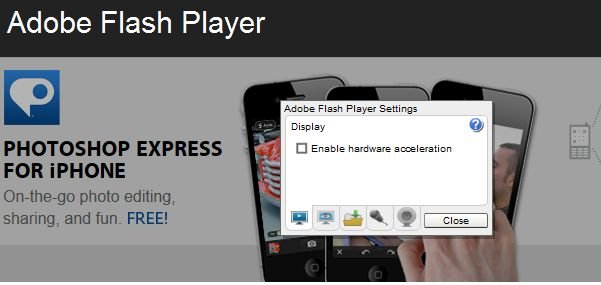
Updating the flash player and the browser does not help. After a lot of searching the culprit was found to be the hardware acceletation setting of the new flash player.

Go to this site: http://www.adobe.com/software/flash/about/.

Right click on the Flash logo, Settings,
then UNcheck the hardware acceleration in Display Settings.

If that doesn’t solve it, you may need to update your video card driver also.

If everything is right the flash animation will show up on the page mentioned above. And you will not face issues with the video sites like youtube and all.